


Design Toolkit
For people who never signed up to be designers.
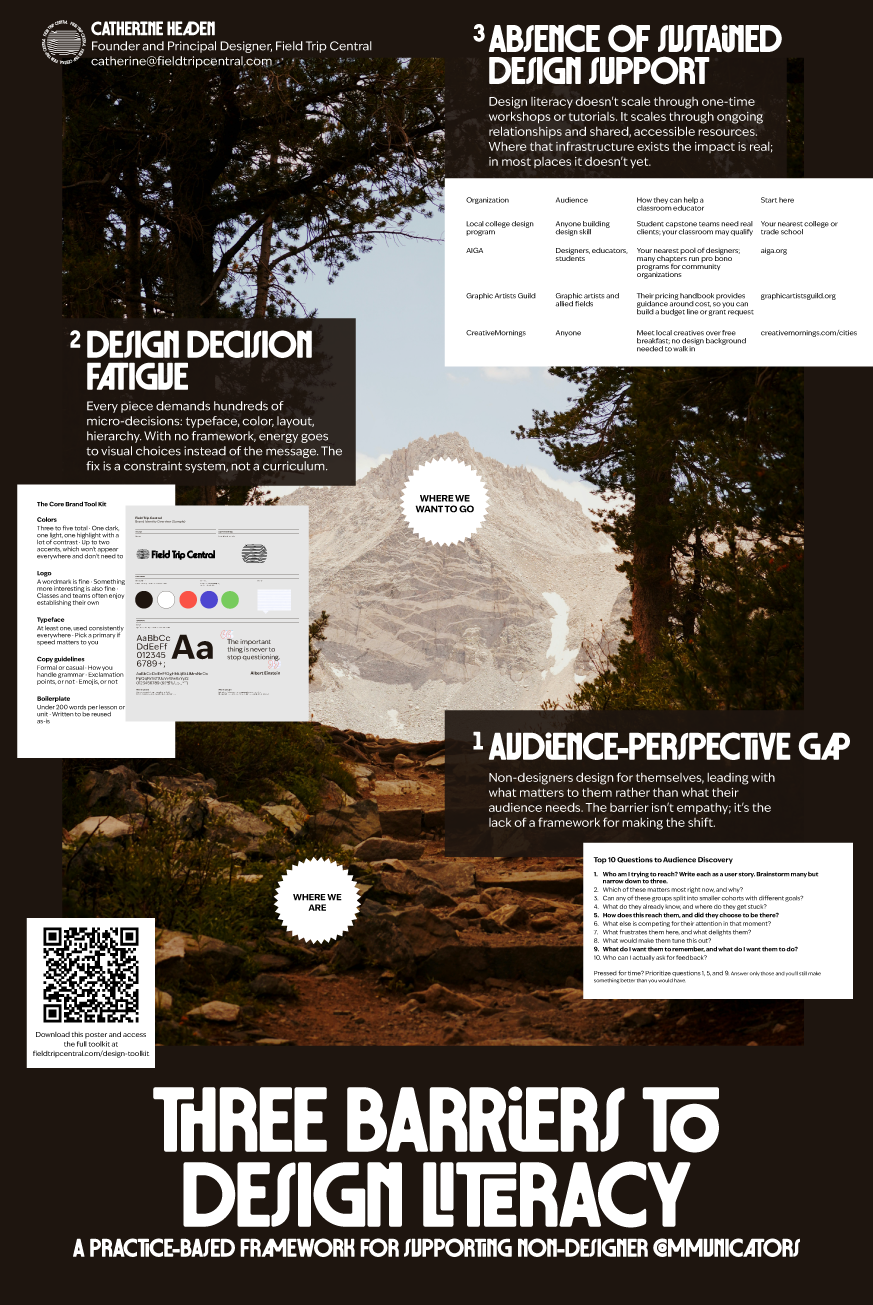
A short list of decisions worth making once, so you're not making them again on a deadline. Built from eight years of the same four questions, asked by teachers, program coordinators, and nonprofit staff who needed to communicate well and had no budget to do it with.
What it is
A free toolkit, not a course. Five decisions and a couple of optional ones, written to be filled in during a prep period and used for years. Colors, a logo, a typeface, how you sound, what you reuse. It assumes no design training and no software beyond what you already have. It's grounded in the same things the rest of our practice is: accessibility, narrative clarity, and respect for the people on the other end.
WHAT IT'S FOR
Family newsletters that get read; flyers that survive a backpack; slide decks assembled at 10pm; grant reports; program materials that have to look like they came from the same organization; classroom and club identities that students build themselves; anyone required to communicate clearly who was never given the tools to do it.
HOW WE WORK
Most of the people who ask us these questions can't hire a designer, so the toolkit is free and there's nothing to sign up for. When there is budget, we work the way we always do: a conversation about what you're trying to do, who you're trying to reach, and what the work actually has to accomplish. We also help institutions build the shared resources their people keep asking for, which is usually the cheaper problem to solve.


